
Insights
What’s New in the 11th Edition of the MUTCD
The Manual on Uniform Traffic Control Devices (MUTCD) is the national standard that establishes the rules for the design and use of traffic signs, signals, pavement markings, and other roadway messages throughout the United States. It affects cities and municipalities by guiding how they plan, install, and maintain traffic control devices so roads are more consistent, understandable, and safer for drivers, pedestrians, and bicyclists.
The 11th Edition represents one of the most significant updates in years. While the manual still covers the same core topics such as signs, pavement markings, and signals, this edition places a much stronger focus on safety, consistency, and how people use roads today. The changes affect everyone from state transportation agencies to local cities and engineers working on everyday projects.
Reinforcing Roadway Safety
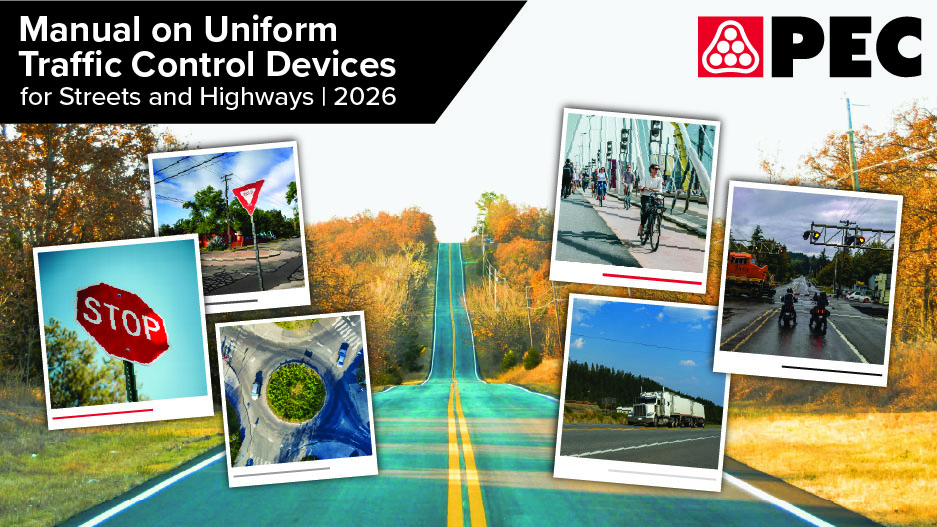 A major theme throughout the update was the Safe System Approach. This approach acknowledged that people make mistakes and emphasized that road systems should be designed to reduce the likelihood that those mistakes result in serious injuries or fatalities. The MUTCD placed greater emphasis on protecting vulnerable road users, including pedestrians, bicyclists, and people with disabilities. It also reinforced the idea that traffic control devices should promote predictable behavior from drivers.
The MUTCD now clearly states that it is not a roadway design manual but a national standard for traffic control devices. New sections explain how states must adopt the MUTCD and how any state supplements must remain in substantial conformance with the national document. States had until January 18, 2026, to complete adoption, although compliance dates for specific devices are separate. The update also expands guidance on engineering judgment, explaining who may apply it and under what authority. The Federal Highway Administration (FHWA) is also taking a stronger stand to verify that agencies are conforming to the MUTCD, meaning that all Standards, Specifications, Guidance, and Policy are updated to compliance.
Signage Updates
Several new compliance dates stand out. New weight limit signs, low clearance signs, and low ground clearance railroad crossing signs each are effective as of January 2023. Signalized railroad crossings must undergo safety assessments within ten years of adoption.
New stricter standards are now in place for signage. Permanent signs should no longer be used just to restate basic rules of the road. Symbol shapes and colors may not be modified, and certain shapes like STOP signs or railroad crossbucks must not be blocked by other signs. STOP and YIELD signs may not be used as tools to slow traffic. This is according to the Highway Sign Manual which also conforms to the MUTCD. The MUTCD also discourages humorous or unclear messages on changeable message signs. For roundabouts, the term “circular intersection” is now used more consistently, and new guidance clarifies proper signing.
Roadway markings now include new guidance for crosswalks. Green-colored pavement is allowed only in specific bicycle applications and may not be used for other purposes, such as parking or crosswalks.
Traffic Signal rules introduced important changes by shifting guidance on signal warrants. This allows agencies to rely more on engineering judgment rather than treating warrants as automatic triggers. Bicycle signals and Rectangular Rapid Flashing Beacons are now fully incorporated into the MUTCD instead of being interim approvals. New standards also address accessibility and how unused signal heads should be covered.
Additional Updates and New Regulations
Later sections bring additional updates. There are new regulations regarding automated vehicles that stress uniformity, though they do not require new devices. Temporary Traffic Control rules add guidance on late-merge strategies, worker protection, night work, and accessible pedestrian detours. Rules around School Areas remained mostly the same, with added recognition of bicycles as a mode of transportation. The final parts of the update added clarity for railroad crossings and expanded bicycle‑specific signs, markings, and guidance.
Overall, the 11th Edition MUTCD focused on clarity, consistency, and safety, while giving agencies more flexibility to apply professional judgment as road users and transportation needs continue to evolve.