Insights
Engineering Power Systems to Meet Growing Demands
Supporting Industrial Operations and Municipal Communities
Electric power systems support modern life in much the same way water and transportation networks do—quietly, continuously, and often unnoticed. Industrial facilities depend on reliable electricity to keep production moving. Municipal communities rely on it to power homes, schools, hospitals, utilities, and public services. When power systems are undersized or fail, the impacts are immediate: lost production, disrupted services, safety risks, and escalating costs.
Engineering medium- and high-voltage power systems requires a careful balance of capacity, reliability, maintenance, safety, and long-term adaptability. At Professional Engineering Consultants (PEC), this work spans both industrial facilities and municipal infrastructure, where thoughtful design supports growth, resilience, and community needs.
Why Higher Voltages Are Necessary
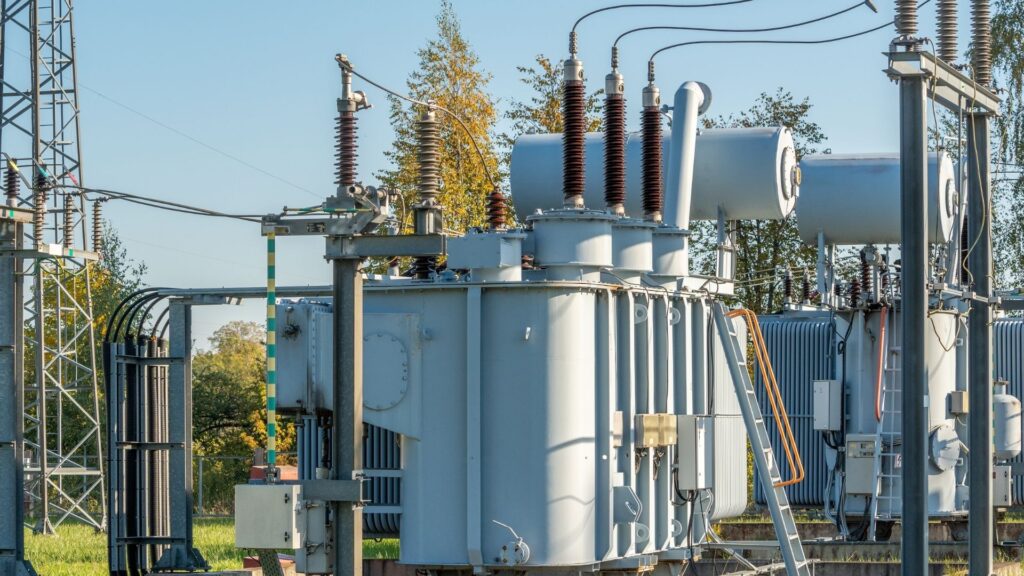
As electrical demand increases, both industrial and municipal systems often reach the practical limits of low-voltage distribution. Small commercial buildings and residential neighborhoods can typically operate on low voltage, but larger facilities and growing communities require medium- or high-voltage systems to deliver power efficiently and reliably.
For industrial facilities, higher voltages support:
- Large motors and continuous process equipment.
- Energy-intensive manufacturing and refining operations.
- Expansive sites with long distribution distances.
For municipalities, higher voltages enable:
- Utility substations serving growing populations.
- Water and wastewater treatment plants.
- Hospitals, schools, and essential public facilities.
- Expanding neighborhoods and mixed-use developments.
Medium voltage systems typically range up to 35 kilovolts, while high voltage systems often operate at 69 kilovolts and above. These voltage levels reduce losses, support higher loads, and form the backbone of both industrial power systems and public electric infrastructure.
Designing for Reliability and Continuity of Service
Reliability is a critical design driver across both sectors. In industrial settings, power interruptions can halt production, damage equipment, or require lengthy restart procedures. In municipal environments, outages can affect public safety, emergency response, and essential services.
Well-designed power systems incorporate resilience through:
- Multiple utility or generation sources.
- Redundant or looped distribution systems.
- The ability to isolate faults without widespread outages.
For cities, this means maintaining service to critical facilities such as hospitals and water treatment plants. For industrial sites, it means minimizing downtime and protecting sensitive processes. In both cases, system flexibility allows maintenance, upgrades, and expansion without compromising operations.
Safety at Medium- and High-Voltage Levels
As voltage increases, so do safety requirements. Medium- and high-voltage systems must meet strict national codes, utility standards, and industry best practices governing:
- Electrical clearances and equipment spacing.
- Grounding and bonding systems.
- Physical barriers, fencing, and controlled access.
- Protective relaying and automated controls.
For municipal systems, these measures protect the public and utility workers. For industrial facilities, they safeguard operating personnel and critical assets. Protection systems continuously monitor electrical conditions and respond automatically when abnormalities occur, limiting damage and reducing risk.
Planning for Growth and Change in Aging Systems
One constant shared by both industrial facilities and municipal communities is change. Plants expand, processes evolve, populations grow, and electrical demand steadily increases. Many of today’s power systems, however, were designed decades ago for operating conditions that no longer exist.
Across the country, aging and undersized electrical infrastructure is being asked to support higher loads, tighter reliability expectations, and new technologies it was never intended to serve. In industrial environments, this often shows up as overloaded feeders, limited spare capacity, or equipment approaching the end of its useful life. In municipal systems, it can mean older substations, constrained distribution networks, and limited flexibility to support new development or critical facilities.
Electrical systems designed only for current conditions can quickly become constraints as demand grows. When infrastructure lacks foresight, expansions become more disruptive, outages harder to avoid, and upgrade costs significantly higher.
Effective power system design recognizes these challenges and anticipates future needs by:
- Selecting voltage levels that support long‑term growth, not just current demand.
- Providing physical space and electrical capacity for future transformers, feeders, and switchgear.
- Designing layouts that can expand or reconfigure without major system rework or extended outages.
For municipalities, this approach supports community growth, improved reliability, and easier integration of new developments or public services. For industrial facilities, it reduces the risk of production‑limiting bottlenecks and enables process expansion without major downtime.
This forward‑looking strategy helps modernize aging infrastructure incrementally rather than reactively. By addressing capacity, flexibility, and system resiliency early, both industries and communities can reduce lifecycle costs, avoid disruptive retrofits, and transition legacy power systems into infrastructure that is ready for today’s demands and tomorrow’s growth.
Power as Essential Infrastructure
Electricity may be invisible, but it underpins nearly every aspect of modern life. From keeping manufacturing lines moving to delivering clean water and reliable public services, medium‑ and high‑voltage power systems form a critical layer of infrastructure.
At PEC, we design power systems that serve both industrial operations and the communities around them, transforming electrical demand into reliable, safe, and adaptable infrastructure. When these systems perform well, most people never notice—and that is often the best measure of success.